Diane Coyle wonders where the Robots for the People are

Diane Coyle maintains The Enlightened Economist blog (and has written a thoroughly enjoyable book on the GDP, no less), so I visit her blog every so often. Today’s offering discusses Martin Ford’s book Rise of the Robots. She is optimistic about capitalism creating a wave of new jobs, as it has done every time pessimism about technology stealing jobs from people became prominent in the last 250 years. Whether that is going to continue this time is an open question. I do want to emphasize the distributional problems of the rise of the robots, and I will do it by simply quoting here her last paragraph:

Well, maybe I’m delusionally optimistic. Ford ends the book with figures from the BLS. Between 1998 and 2013, there was a 42% real increase in US GDP, but no increase in the total hours worked. He thinks that’s a bad thing. I think it’s a good one – with the huge proviso that the benefits of growth must be widely shared. They haven’t been. We don’t have the people’s robots. That’s the real problem.


On having finished the book Sapiens

I have written here about reading Harari’s book Sapiens. I have finished the book since that post appeared. Now, separated from the time of finishing the book by a few days, in which I spent a lot of time reading graduate student dissertation proposals and writing lecture notes, I thought I would write down my lingering impression from the book.

This impression is bleak. The various revolutions Harari talks about left individual members of Homo Sapiens less well off than before, with the Agricultural Revolution as a prime example. Even worse were the effects of these revolutions (Cognitive, Agricultural, Industrial) on other species on planet Earth.

A secondary impression I got was one of a fundamental tension between Harari’s portrayal of history as proceeding without regard to what is good or bad, for humans or other species, and constantly talking about effects of historical changes as good or bad. I am perfectly content to read normative statements in a book on history (or economics, as a matter of fact), but I want a clearer idea of the author’s ethical convictions. Harari does not elucidate a moral philosophy, but one seems to be in the background, one that I would have liked to be made clearer.

Orchids

From time to time, I share my photography here. This is an orchid photo from Longwood Gardens last night. Click or tap on it for the full size version.

Orchids 2015-08-06 20.12.33

Reading history – Sapiens by Yuval Noah Harari

I have always wanted to make more time to read history books and often they disappointed me when I did make the time. A few times I come across a book that takes a magisterial view of history and yet is written in such an engaging way that I want to read it to the end as soon as I can. Sapiens by Yuval Noah Harari is one of these books. I am currently about three quarters of the way into it and I should finish it soon. (Yes, I’ve been promising more reading, and posting, about environmental economics. But along the way I thought a wider historical view would help me grasp the topic of impending environmental catastrophe better. Hence, I returned to this book, which I had only tasted briefly before, whereas this weekend I really got into it.)

So far, it strikes me as a tremendously well-written book. Yes, I don’t think Harari has everything about economics and game theory down right; the few references to these topics I found so far were generally accurate but somewhat misleading in their details. But he sure has the concept of money well understood, when he states that “money is the most universal and most efficient system of mutual trust ever devised” (page 180). I am looking forward to getting to the chapter on Capitalism tonight; only the chapter on the marriage of science and empire is between my bookmark and that.

Science colleagues and friends, this is what it takes to succeed, beyond hard work, good ideas, and luck: really direct, spellbinding, convincing writing. One more reason I am going to finish this book is as a case study on how to write serious subjects well. Maybe I can emulate it. This very blog is a place for me to practice.

More on “mathiness” in economics

Paul Romer has a new post about “mathiness”, this time in financial economics. Right at the top of the post, he includes two links to blog posts by Tim Johnson about how mathiness was used to obfuscate what the math says in finance, so that official investigations into the latest financial crisis, the one that started in earnest in 2007, would miss something. In Romer’s words, “People in finance used math to hide what they were doing.” The Johnson posts are rich in material from the beginnings of probability theory, incidentally, and surprised me with a connection to Aristotle and how thinking about money as a universal measure showed people the way to apply math to physics; Johnson also connects finance to a notion of justice. Fascinating stuff! I hope to carve some time out to delve in this more deeply.

H/T for the Paul Romer link: Mark Thoma, here.

Climate fiction course taught at my university

I have been publishing posts on the environment here lately and, most recently, about Cli Fi (climate fiction, rhymes with sci fi). Yesterday I read this post on Medium by Ted Howell, which informed me that this past spring semester he taught a class on this very topic at my university. You can see the class blog here. So now I have vague dreams of coming up with a class to teach in spring 2016 (too late for fall 2015) that would combine the basics of environmental economics with cli fi. Call me crazy if you must.

Cli-fi, the poetry we need to save ourselves?

I was reading papers by economists today, in a symposium issue of a journal about international climate negotiations. I have mentioned these papers here before. Since I am an economist, I have no difficulty following these papers, but they are far from eloquent for the average person. The average person is the one who needs to push her government to act to limit climate change, though. The average person is the one to cut his energy consumption, despite feeling the pinch. Do we need a Homer to write an Odyssey for our trek through a perilous future of climate instability with its concomitant famine, pestilence, and war?

My inbox then received an email from Matter, a magazine / collection of essays on Medium, that speaks directly to this need I perceived. It contained links to several essays that point to the recent emergence of Cli-Fi, Climate Fiction, that could be the Homeric effort our times need. It may not be sufficient, but I am glad it has developed.

Among these essays, I enjoyed most the call to action by the indomitable Margaret Atwood (whose MaddAddam trilogy is sitting in our den, 1/3 read by yours truly — I really need to get better at finishing what I start reading!). I also enjoyed an essay by Dan Bloom on Cli-Fi and one by Ed Finn. If you are on Medium, you can follow Matter at the link I gave above, repeated here, and you can also follow the tag Cli Fi. If you are not on Medium, you are missing out on some good writing; why not join? It costs no money.

Sunset rumination

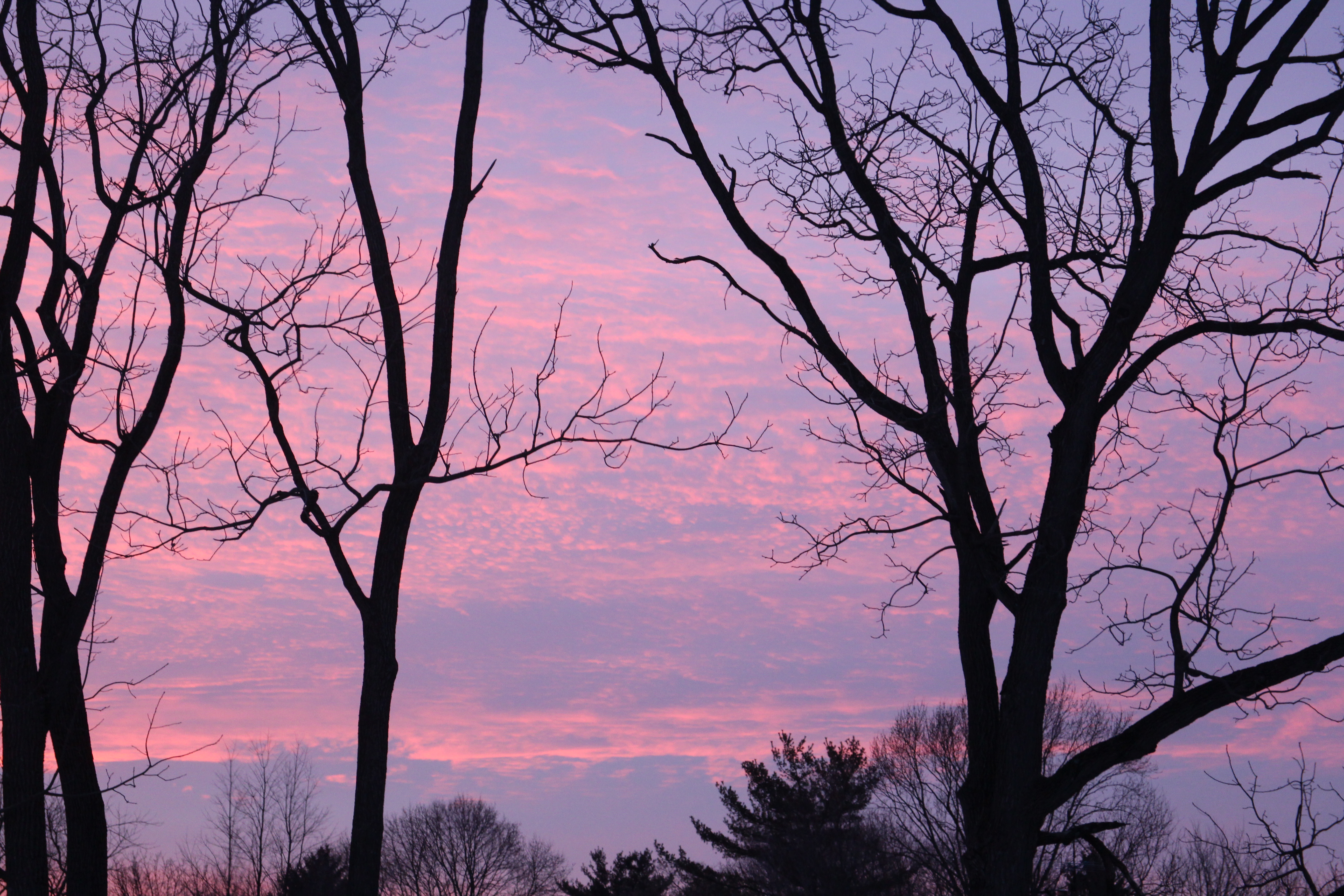
Sunset. I have taken many photos of the sunset from the guest room window, and, lately, from the bathroom window. Reading dystopian novels, as I have been doing lately, albeit slowly, might be connected to my sunset obsession by an over-eager psychoanalyst. I share Nabokov’s opinion about such analysts however. So I will keep shooting the sunset as art. I will only think of it as presaging the coming ecological disaster and the twilight of civilization when I am in a really dark mood. During the day, I will do what I can to convince people, using my knowledge, talents, and position, to do their bit to avoid the disaster. During the night, I may post more rambling paragraphs like this one.

And now, please excuse me as I return to Annihilation by Jeff Vandermeer, a book lent to me by my friend Troy, which somehow has captured me more than I expected before I started it.