




Month: May 2016
Panorama 2 from Bowman’s Hill Tower
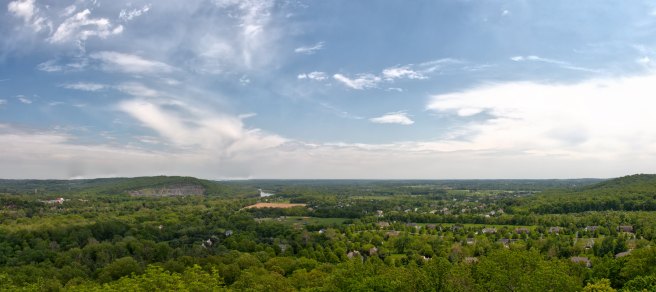
Panorama 1 from Bowman’s Hill Tower

More photos from the Morris Arboretum today








Ladybug

Philadelphia sky yesterday

Taken with my iPhone 6 plus at 17th and JFK around 2:30 pm on 2016-05-19 in optimal sky conditions for this shot. I am glad I looked up before going down to the train station and saw that it was time for the phone to come out my pocket and be of use making this photo.
Incentives work, but they will surprise you if you ignore the context
In this post, Sumit Mishra discusses incentives. He offers links to research on incentives that show time and again that monetary incentives can backfire. Economists need to heed this advice, which they often honor on the breach. Here is a pithy quote from the last paragraph, but I do recommend reading the entire post.
Research shows that an optimal mix of monetary and non-financial incentives can be effective in designing public programmes. Non-financial rewards can help whenever paying cash doesn’t work. Identifying which one of these works remains a challenge, though.
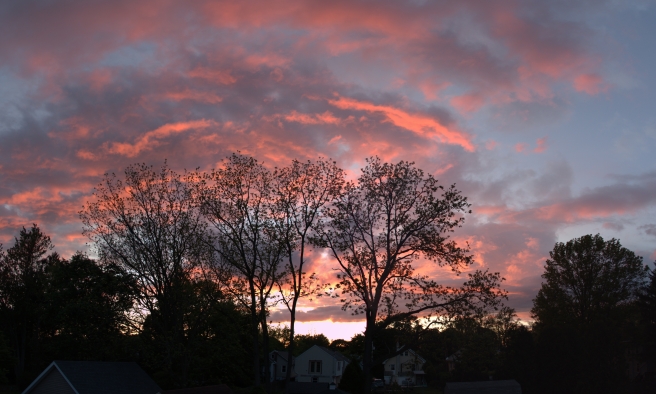
Sunset photos from today



Love

A weak defense of Econ 101 leaves me unimpressed
Michael Strain says that even economists are incorrectly negative on the typical economics 101 course. To his rah-rah argument, I only have the time and inclination to say right now: the ceteris paribus (all other things constant) foundation of demand and supply, as presented in introductory economics, is false all too often, therefore “demand” and “supply” curves are meaningless. Discuss.
We do need to improve how we teach economics, and to improve economics itself. But I think more serious consideration of networks, instead of markets, and the overall economy, in some sort of general equilibrium way, along with evolutionary arguments, are much more promising avenues to get on than becoming yet more “parrots who say supply and demand all the time”, to paraphrase an epigraph I recall from an introductory textbook by Paul Samuelson, which I read several decades ago.
 The curious incident of DD on the Web